
Recent Posts

April 6, 2026
Let’s be honest about something.
You’ve told yourself you’ll start going to the gym at least a dozen times this year. You’ve downloaded the fitness app, bought the shoes, and maybe even looked up gym membership prices in Colombo. But Monday becomes Tuesday, Tuesday becomes Friday, and by the weekend, you’re too exhausted to do anything except recover for the week ahead.
This isn’t a discipline problem. It’s a design problem.
If you’re working in Colombo or commuting into it from Nugegoda, Maharagama, Kaduwela, or anywhere along the High Level Road, your day is already stacked against you before you’ve even thought about exercise. The average commute in and out of Colombo eats up two to four hours of your day. Add a nine-hour workday, dinner, family time, and basic human recovery, and you’re left with close to nothing.
So the question isn’t “why aren’t you going to the gym?” The real question is: how do you build a fitness routine that actually fits the life you’re already living?
That’s what this guide is about.

Why the gym model doesn’t work for most professionals in Sri Lanka
The traditional gym model assumes a few things: that you have a predictable schedule, that you live close to a facility, that you have the mental energy after work to commute somewhere, change, train, shower, and get home. For a large portion of working professionals in Colombo, none of those conditions is consistently true.
Traffic is unpredictable. Work runs late. Some weeks are brutal, and some months feel like they never slow down. Locking yourself into a gym membership you can only use three times a month isn’t a fitness strategy. It’s an expensive source of guilt.
The professionals who actually stay fit in Sri Lanka long-term aren’t the ones grinding it out at a gym six days a week. They’re the ones who’ve figured out how to move a non-negotiable part of their home and daily routine, low-friction, consistent, and sustainable even on the hard weeks.
The mindset shift that actually changes things
Before getting into the equipment or the workout plans, there’s a reframe worth making.
Most people think about fitness as something separate from their real life, a habit they need to “add” to an already full schedule. The professionals who stay in shape think about it differently. They treat movement the way they treat sleep or eating: not optional, not conditional on motivation, just something that happens because the conditions for it already exist.
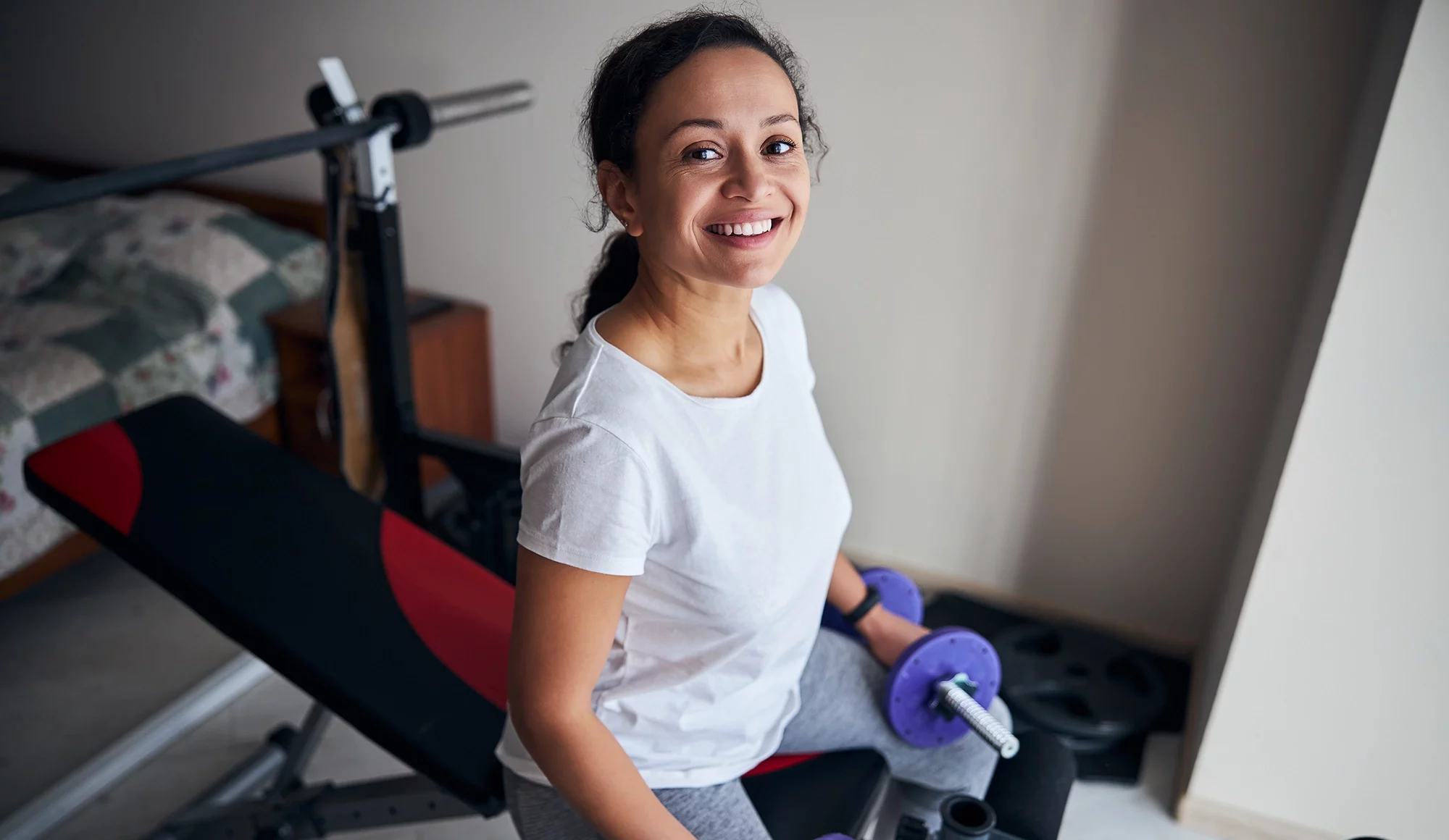
That’s the power of a home setup. When your gym is ten steps from your bedroom, the activation energy drops to almost zero. You don’t need to be motivated. You just need to show up. And showing up for twenty minutes three times a week is worth infinitely more than the perfect program you never start.
What a realistic routine actually looks like
Here’s a structure that works for busy professionals, not a fitness influencer’s schedule, not a six-day programme, but something a working adult in Colombo can actually sustain.
Three sessions a week, twenty to thirty minutes each.
That’s it. Science consistently shows that three well-structured sessions a week deliver most of the health benefits of daily training, better cardiovascular health, improved metabolism, maintained muscle mass, reduced stress, and better sleep. You don’t need more volume than that to stay in good shape. You need consistency.
A simple weekly structure might look like this:
Monday evening or Tuesday morning, a strength-focused session using dumbbells or resistance bands. Compound movements: squats, rows, shoulder press, lunges. Thirty minutes, done.
Wednesday or Thursday, a cardio session. If you have a treadmill at home, a thirty-minute brisk walk or a light jog after work is enough. If not, bodyweight cardio circuits such as jumping jacks, mountain climbers, and step-ups get the same job done.
Saturday morning, the longer session. Forty to forty-five minutes combining strength and mobility. This is your proper workout of the week, and since you’re not rushing to the office, you can actually enjoy it.
That’s roughly ninety minutes of structured exercise across the week. Less than a single Netflix binge.
The five pieces of equipment that make this possible at home
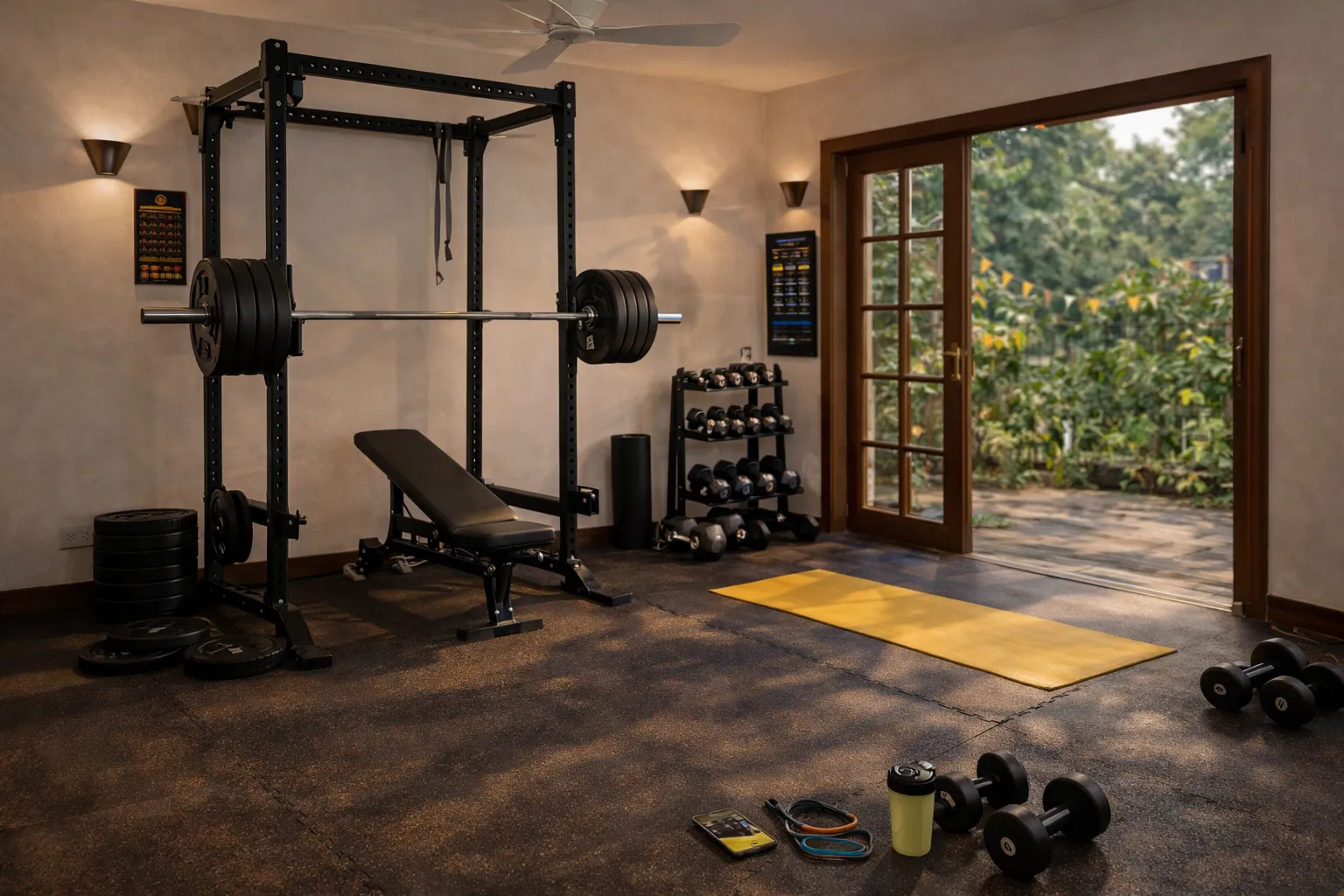
You don’t need a full commercial gym setup. You need a small, smart collection of equipment that covers your bases without taking over a room. Here’s what actually matters.
- A treadmill: This is the anchor of any serious home fitness setup. The reason isn’t complicated: walking and running are the most natural forms of cardio, and having a treadmill at home removes every single excuse not to do them. Rain, traffic, time of day, safety, none of it matters. A thirty-minute walk at 5.5 km/h on an incline after dinner does more for your cardiovascular health and stress levels than most people realise. Quantum Fitness’s ProForm and NordicTrack treadmill range includes models with iFit integration, which means you can walk through trails in Patagonia or train with a world-class coach while standing in your living room. The technology genuinely makes cardio less boring.
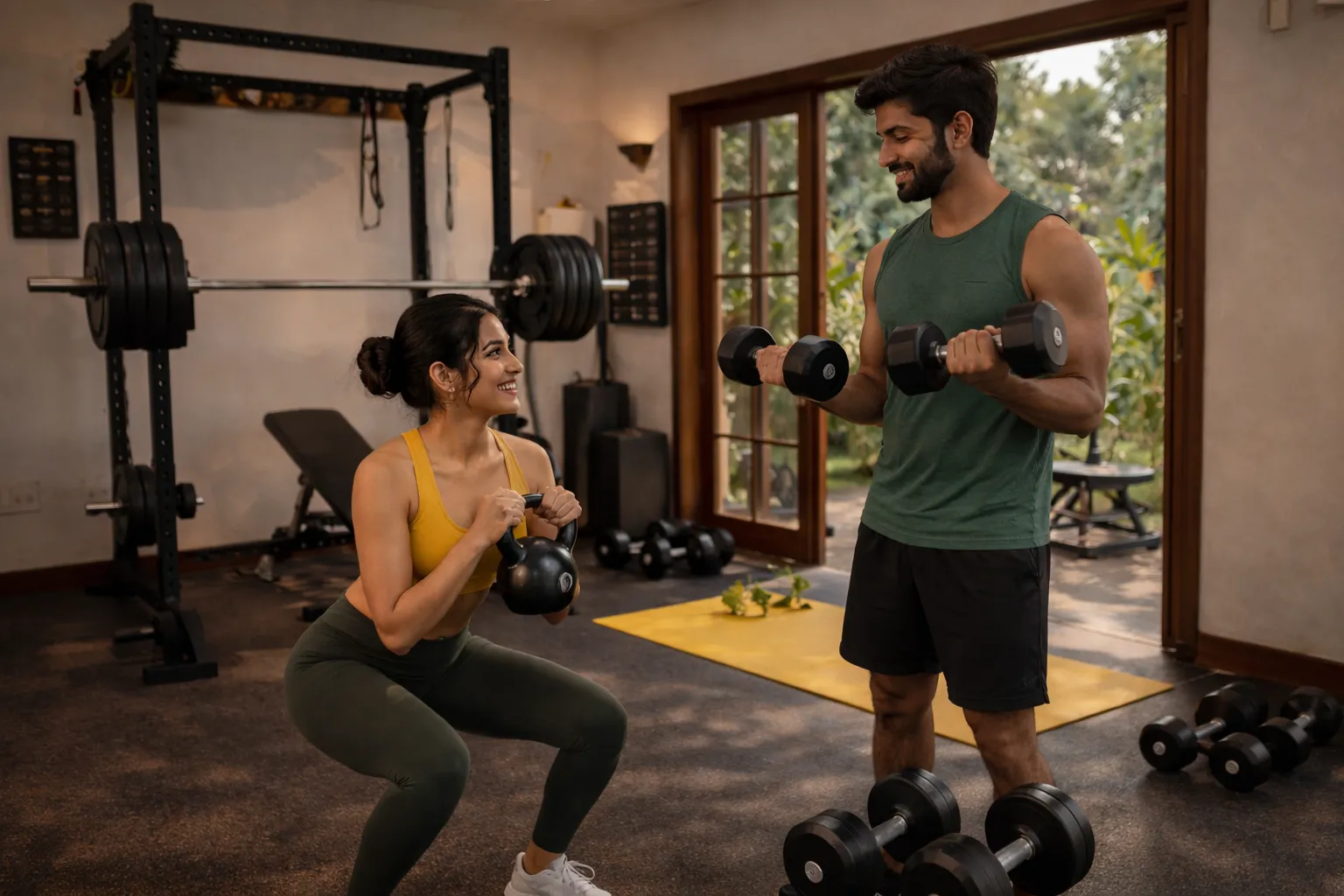
- Adjustable dumbbells: If the treadmill is your cardio anchor, dumbbells are your strength anchor. A single set of adjustable dumbbells replaces an entire rack of fixed weights and takes up the space of a small suitcase. You can build a complete upper and lower body strength programme using nothing else: bicep curls, goblet squats, Romanian deadlifts, shoulder presses, bent-over rows. As you get stronger, you simply increase the weight. Compact, versatile, and worth every rupee.
- Resistance bands: These are the most underrated pieces of fitness equipment you can own. They’re cheap, they take up zero space, and they’re particularly brilliant for two things: warm-up and activation work before your sessions, and supplementing strength training for muscles that dumbbells are harder to isolate, like your glutes, rear deltoids, and mid-back. They also travel, which means your routine doesn’t have to fall apart on a work trip.
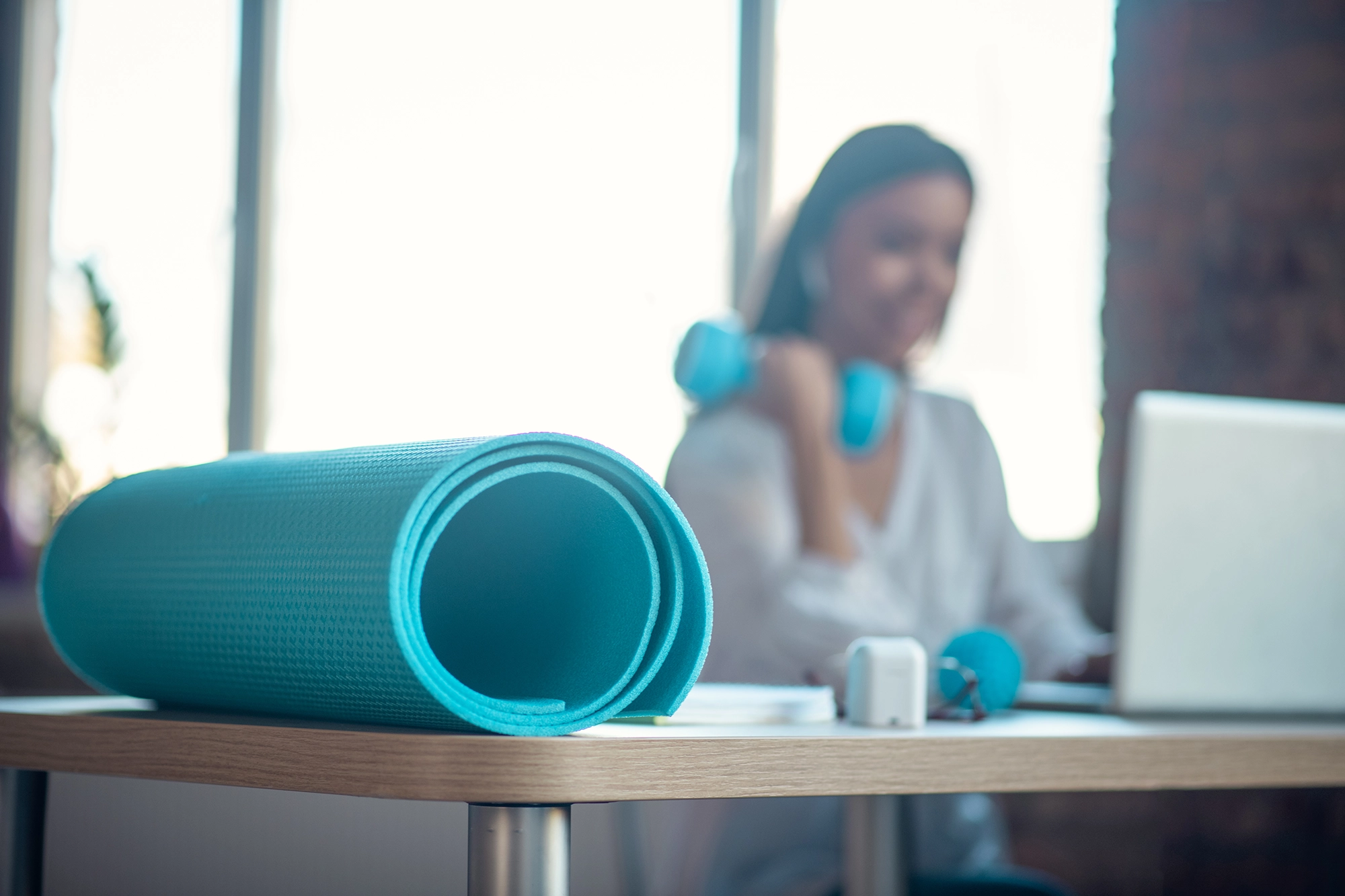
- A yoga mat: This is less about yoga and more about giving yourself a dedicated space to work out. A mat signals to your brain that you’re in workout mode. It protects your joints during floor work, stretching, and core exercises. And after a strength session, spending ten minutes stretching on a mat is one of the highest-return habits you can build. It keeps you moving well as you get older, reduces next-day soreness, and genuinely helps you recover faster.
- A smart scale: Not to obsess over your weight daily, but to track progress objectively over time. A good smart scale measures more than just kilograms. It tracks body fat percentage, muscle mass, and BMI, giving you a much clearer picture of whether your training is actually working. The goal isn’t to hit a number. It’s to trend in the right direction over weeks and months. Quantum Fitness’s smart scale range makes this easy and accurate.
The twenty-minute backup for the brutal weeks
Even with the best setup, there will be weeks where everything falls apart. The project deadline extends, someone gets sick, life happens. Here’s your emergency protocol: the twenty-minute session that keeps your habit alive.
Set a timer. Do four rounds of this:
Ten bodyweight squats. Eight push-ups. Ten dumbbell rows. A thirty-second plank.
That’s it. You won’t break any records, but you will maintain the neural groove of being someone who exercises. And that identity maintenance is worth more than any single session.
One more thing worth saying
The fitness industry in Sri Lanka, globally, honestly, has a habit of making people feel like they’re failing if they’re not doing it perfectly. If you’re not hitting the gym five times a week, if you’re not eating clean every meal, if you skipped a week because of work, somehow you’ve fallen off.
That framing is what keeps people stuck in the start-stop cycle forever.
The professionals who stay fit don’t have better willpower. They have better systems. A treadmill at home. A set of dumbbells in the corner. A mat was rolled out on the bedroom floor. The bar is low enough that on your worst Tuesday evening, you can still step over it.
Start there. Build the system. The results follow.
Ready to build your home fitness setup? Explore Quantum Fitness’s full range of treadmills, dumbbells, resistance bands, and smart scales at quantum.lk or visit one of our showrooms across Sri Lanka for a hands-on look at what fits your space and your goals.