

October 30, 2026
Talent gets an athlete noticed. Preparation keeps them on the field. Whatever the sport, the athletes who last longest and perform best usually share one habit: a smart, consistent strength and conditioning (S&C) program. In this first post, we look at why S&C matters for every athlete, and how Keiser’s air-resistance training technology makes it more effective.
What Is Strength and Conditioning Training?
Strength and conditioning are the structured development of the physical qualities sport demands: strength, power, speed, endurance, mobility and stability. It goes beyond “going to the gym.” A good program is built around the athlete’s sport, position, season and injury history.
Why Athletes Need It
-
Greater strength and power
Strength is the foundation for almost every athletic skill. A stronger athlete can produce more force, and force produced quickly is power: the explosive first step, the vertical jump, the tackle, the throw, the sprint finish. Training that targets both strength and the speed at which force is produced is what separates a good athlete from a great one.
-
Fewer injuries
Strong muscles, tendons and connective tissue absorb the stress of running, landing, cutting and collision. Well-built S&C programs strengthen the joints and correct muscular imbalances before they turn into injuries. Training the body to handle load is one of the most reliable forms of injury prevention.
-
Better endurance and recovery
Conditioning improves how efficiently the body uses energy and how quickly it recovers between efforts, whether that is repeated sprints, a full match or a long season. Athletes who are well conditioned maintain technique and decision-making when fatigue sets in.
-
Improved movement quality
S&C teaches athletes to move well: to brace the core, control the hips, land softly and change direction efficiently. Better mechanics mean less wasted energy and a lower risk of strain.
-
Longevity and confidence
A physically prepared athlete trains harder, recovers faster and competes with more confidence. Over a career, that consistency adds up.
Where Keiser Fits In
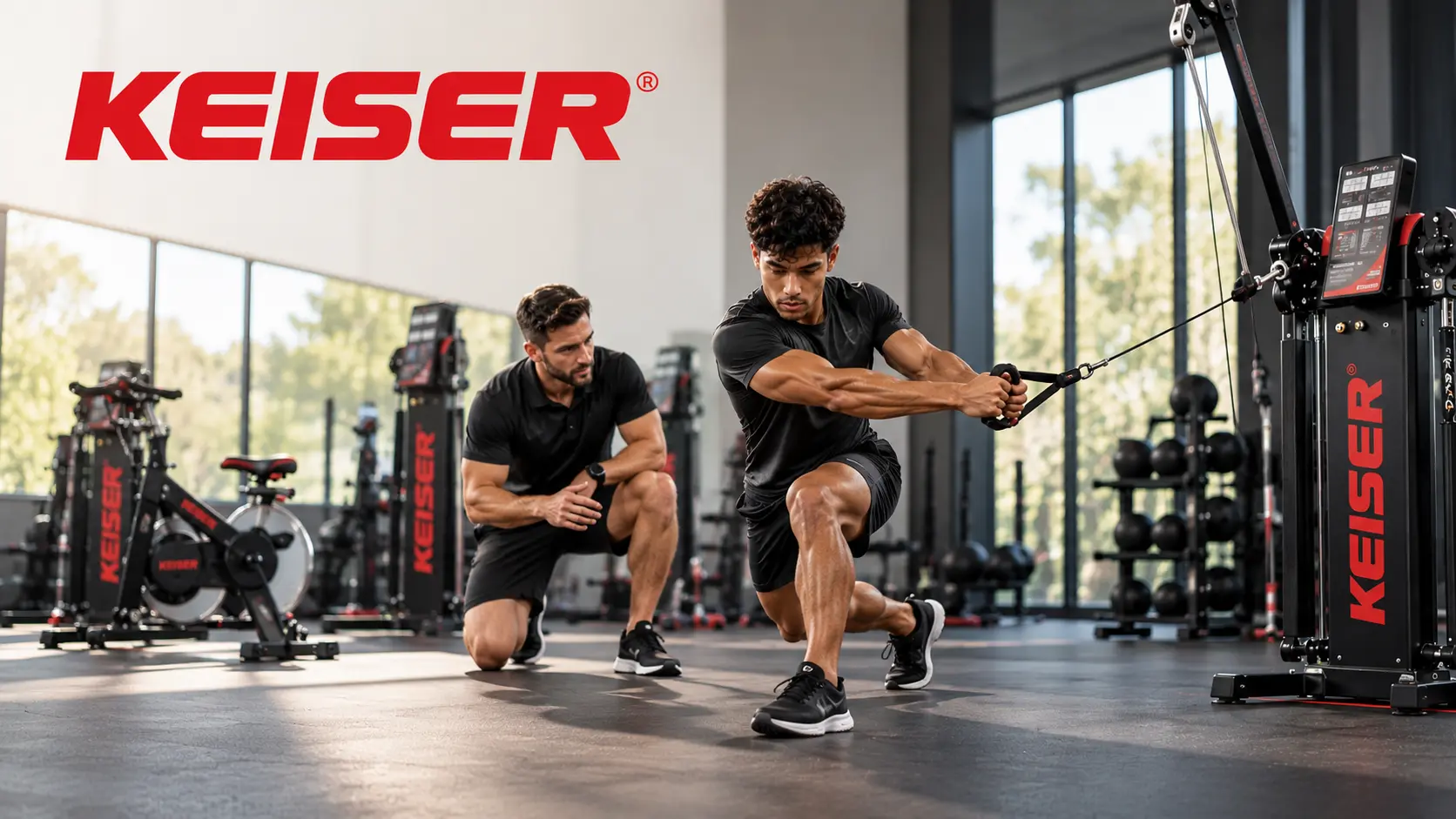
Traditional weight training relies on gravity and inertia. Keiser equipment uses pneumatic (air) resistance instead, which changes how the athlete experiences and benefits from each repetition.
Smooth, joint-friendly resistance
Because resistance comes from compressed air rather than heavy plates, there is no momentum to swing and no jarring start to each rep. The load feels smooth through the full range of motion, which can be gentler on joints. This makes Keiser a useful option for athletes in rehabilitation, returning from injury or managing heavy training schedules.
Train for power, not just strength
Keiser machines allow athletes to move against resistance at speed, which is essential for sport. Many Keiser systems can measure power output, so coaches and athletes can see how much power is being produced rather than guessing. Data like this makes it easier to set targets, track progress and adjust training.
Quick, precise adjustments
Resistance can be changed in small increments without stopping to swap weight plates. That makes it easy to train a group of athletes with different strength levels in the same session, keep sets flowing and fine-tune loads for each person or exercise.
Functional, sport-specific movement
With cable and free-moving options, Keiser equipment supports multi-directional, standing exercises that mirror real athletic movement: pushing, pulling, rotating and sprinting patterns rather than isolated machine lifts.
Suitable for every level
From youth and amateur players to elite teams, air resistance can be set low for beginners and rehabilitation or high for advanced power development. One system can serve a whole athletic community.
Putting It into Practice
A balanced athlete program using Keiser equipment might include:
- Strength phase: controlled, higher-resistance lifts to build a base.
- Power phase: faster, explosive movements to turn strength into speed.
- Conditioning: circuits and bike or cardio work to build stamina.
- Recovery and prehab: lighter, joint-friendly exercises to keep the body resilient.
Progress is tracked over time, so the program evolves as the athlete does.
The Bottom Line
Strength and conditioning are not an optional extra for athletes. It is how potential becomes performance and how performance is protected. With smooth air resistance, measurable power output and adaptable loading, Keiser gives athletes and coaches a practical way to train smarter at every stage of their journey.