


May 8, 2026
You’ve probably been walking your whole life without ever thinking of it as a workout.
And honestly, most of the time, it isn’t one. Not in the way it could be. A stroll to the coffee shop, wandering around the supermarket, the aimless school pick-up shuffle: these are movements, and movement is always better than stillness, but they’re not training.
There’s a version of walking, though, that is measurably, significantly better for your fitness. It’s called Japanese interval walking, it takes a minimum of 12 minutes to complete a proper set, and it’s currently one of the fastest-growing fitness trends in the world. Interest has surged nearly 3,000% heading into 2026.
Here’s the thing: you probably already have a walking habit. This just tells you how to make it work.
Where it comes from
Japanese interval walking was developed by researchers at Shinshu University in Japan as part of a long-term population health study. They were trying to find an exercise protocol that was accessible, sustainable, and effective for improving cardiovascular fitness and physical function, particularly in women over 40.
What they found surprised them. The interval structure, alternating between high-effort and low-effort walking, produced much better outcomes than continuous moderate walking, even when the total time was the same.
Study participants who followed the protocol for five months showed significant improvements in aerobic fitness, lower blood pressure, better blood glucose management, and reduced leg muscle fatigue compared to those who just walked steadily.
The protocol spread through Japanese public health circles, then through wellness communities online. It became a global conversation because it works, and because almost anyone can do it.
How it actually works
The structure is surprisingly simple.
3 minutes of fast walking. 3 minutes of slow walking. Repeat.
That’s it. That’s the whole thing.
In practice: during the fast intervals, you’re walking at roughly 70% of your maximum effort. This means you’re breathing harder, you’re covering ground quickly, and it would be slightly uncomfortable to hold a full conversation. Not running. Not jogging. Fast, purposeful walking.
During the slow intervals, you drop back to a comfortable, easy pace, roughly 40% of maximum effort. This is recovery. Let your breathing settle. Shake your arms out. This isn’t slacking. It’s part of the protocol.
Three rounds (3 minutes fast, 3 minutes slow, repeated three times) gives you 18 minutes total. But even two full rounds at 12 minutes has been shown to produce training effects when done consistently.
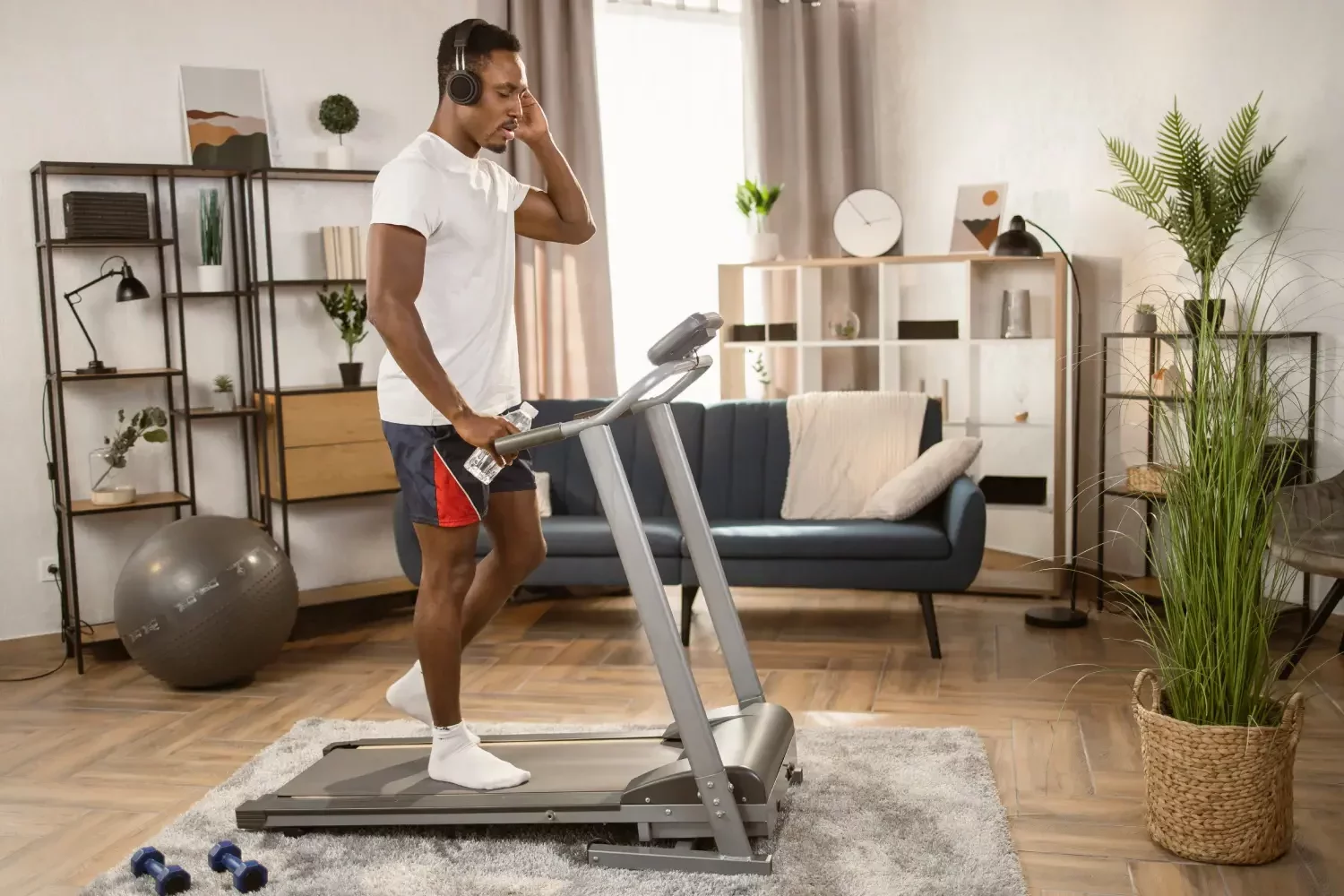
The target is five sessions per week. Most participants in the original study did it outside, but treadmills work perfectly well. So does a stretch of pavement, a park loop, or a quiet street.
Why does the interval structure make such a difference?
Your cardiovascular system responds to challenge. Steady walking at the same pace, day after day, produces diminishing returns. Your body adapts, and the same effort requires less oxygen, less work from your heart and lungs. That’s adaptation, and it’s a good thing, but it means the workout stops being a workout.
Intervals disrupt that adaptation. The fast segments push your heart rate up. The slow segments let it recover partially, but not fully, before the next fast segment hits. This creates a training stimulus that steady walking simply can’t match.
Over weeks, this pattern improves cardiovascular fitness. Your resting heart rate drops. You recover faster. Climbing stairs stops feeling like an event.
For women specifically, the benefits of improved cardiovascular fitness compound over time in ways that matter enormously: better heart health, reduced inflammation, improved metabolic function, and, particularly from perimenopause onward, real support for the hormonal transitions that affect energy and body composition.
How to layer it into your day
This is where Japanese walking gets practical, because most women already walk. It’s just a question of using that time differently.
- The school run: Already doing 10 to 15 minutes of walking? Turn the outward leg into fast intervals and the return leg into slow ones. You arrive at school with your heart rate up and your kids slightly confused about why you’re suddenly speed walking. Worth it.
- Lunch break: If you have 20 minutes and somewhere to walk, this is the best use of that time. Two full rounds plus a two minute cooldown. You’ll come back to your desk with more mental clarity. The cognitive benefit of walking is real.
- Evening walk: The classic. After dinner walking is already one of the best habits for blood glucose management. Making it interval based multiplies the effect.
- Treadmill mornings: Set a slow pace and a fast pace, set a timer on your phone, and alternate. Podcasts work well for slow intervals. Save the focus for fast ones.
What to expect if you start this week
- Week 1 to 2: The fast intervals will feel effortful. Your legs may feel heavier than expected, especially if walking hasn’t felt like “exercise” to you before. That’s the adaptation beginning.
- Week 3 to 4: The fast intervals start to feel more manageable. You might find yourself walking faster in the fast segments without as much conscious effort.
- Month 2: People start noticing. Not dramatically, but something about the way you carry yourself shifts. Posture improves when cardiovascular fitness improves. It’s connected in ways that are hard to explain until you experience it.
- Month 3 to 5: This is where the research really shows up. The improvements in cardiovascular fitness, leg strength, and metabolic markers become measurable. Your resting heart rate drops. Energy levels feel more stable throughout the day.
A few things that help
- A decent pair of walking shoes. Not running shoes. Get proper walking shoes with good heel cushioning and a bit of flexibility in the forefoot. Your gait in walking is different from running, and wearing the wrong shoes for extended walking can create shin and knee issues over time.
- A simple timer or interval app. You can set a repeating 3-minute interval on any phone timer. Some people use interval training apps. Some just count. The method doesn’t matter; the timing does.
- Staying consistent over being perfect. Three sessions a week is better than zero. Five is the goal, but life happens. The protocol works best when it’s a habit. Habits form through repetition, not perfection.
The reason this is having a moment
Walking has always been good for you. But telling women that walking is good for them, without telling them how to make it great, has meant years of underwhelming results, followed by giving up.
Japanese interval walking closes that gap. It takes the most accessible form of exercise on the planet and gives it structure, intensity, and a clear outcome. It requires no equipment, no gym membership, no special clothes. It fits into a life that’s already moving.
In a world full of fitness trends that demand more time, more money, and more willpower than most people have, there’s something almost radical about a protocol that says: just walk. But walk like you mean it.