




July 27, 2026
Most of us are not choosing to be inactive. Between long work hours, commutes, and evenings that disappear into screens, sitting has become the default. Research increasingly links extended sitting time to higher risks of heart disease, weight gain, and other long term health issues, even for people who consider themselves generally active.
The good news is that reversing this does not require a complete lifestyle overhaul. It requires understanding what a sedentary routine actually does to your body, and building small, consistent habits that counteract it.

What a sedentary lifestyle does over time
When you sit for long stretches, your body burns less energy and your muscles, especially the large ones in your legs, become less active in regulating blood sugar and fat. Circulation slows. Posture suffers. Over months and years, this pattern is associated with increased risk of weight gain, cardiovascular issues, and lower overall energy levels.
The tricky part is that sitting does not feel harmful in the moment. There is no immediate discomfort signalling that something needs to change, which is exactly why it is so easy to let it become the norm.
Why short bursts of movement matter more than you think
You do not need to spend hours at the gym to offset a sedentary day. Research on movement and health increasingly points to the value of breaking up long sitting periods with regular activity, even in short bursts. A 20 minute walk mid morning and another after dinner can do more for your overall activity level than one long weekend workout followed by five sedentary days.
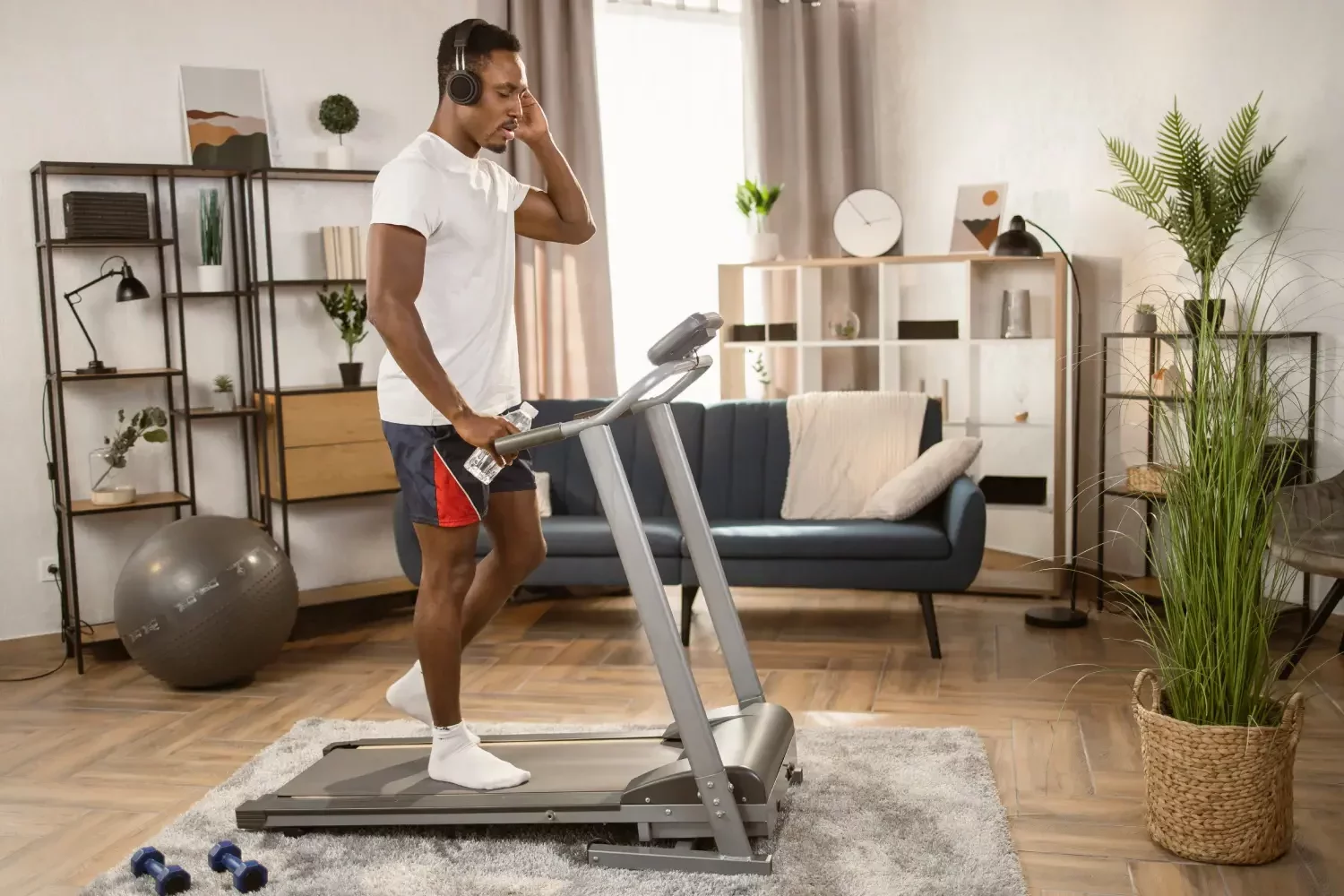
This is where a treadmill becomes genuinely useful, not as a replacement for an active lifestyle, but as a tool that makes movement easy to slot into a day that is otherwise full.
Building movement into a busy schedule
Here is a practical way to start working against a sedentary routine:
- Set a reminder to stand and walk for five minutes every hour during your workday, even if it is just pacing near your desk.
- Use a treadmill at home for a focused 20 to 30 minute session before work, during a lunch break, or in the evening, whichever fits your energy levels best.
- Take calls on your feet or while walking slowly when possible.
- Stack movement onto habits you already have, such as walking while watching the news or catching up on a podcast.
- Consistency matters more than intensity here. A daily 20 minute walk will do more for your long term health than an occasional intense workout squeezed between long sedentary stretches.
Making it easier, not harder
The biggest reason sedentary habits stick is convenience. Sitting requires no planning. Getting up and moving does, especially in a climate and city layout where outdoor walks are not always practical. A treadmill at home removes a lot of that friction. It is there when you have 20 minutes between meetings, when it is raining, or when it is too dark to walk outside safely. If you are thinking about adding one to your home, Quantum Fitness at quantum.lk has options for different spaces and budgets, a good place to start when you are ready to make movement easier for yourself.
Common questions people ask
How much sitting is considered too much?
There is no single cutoff that applies to everyone, but research generally points to risk increasing with longer uninterrupted sitting time. The good news is that breaking up sitting with short, frequent movement appears to help, even without a full workout.
Can short walks really make a difference, or do I need a long session?
Short bursts of movement spread across the day add up. A five minute walk every hour, combined with one longer session, tends to counter the effects of prolonged sitting better than one long workout alone.
Is a treadmill better than a standing desk for this?
They solve different problems. A standing desk reduces continuous sitting during work hours, while a treadmill gives you a dedicated window of actual movement. Many people find the two work well together.
A note on your own pace
Everyone starts from a different place, and that is completely fine. If you have any existing health conditions or have been inactive for a long time, it is worth speaking with a doctor before beginning a new exercise routine, so you can build a plan that is safe and realistic for you.
Small shifts, real results
You do not need to undo years of sitting in one week. What matters is building a rhythm where movement becomes a normal part of your day again, not an occasional event. Start with short, consistent walks, and let the habit grow from there.
Ready to make movement part of your everyday routine? Explore the treadmill range at Quantum Fitness and find the setup that works for your home and your schedule.